
Choctaw County Arrest Records and Court Charges
A Choctaw County arrest record documents the moment a person is taken into custody. It shows who made the arrest, the booking date, and the early charge labels the sheriff lists at the jail. An arrest record is not a finding of guilt. It is the law enforcement side of the event. The court charge record starts later. After the District Attorney reviews the case, formal charges are filed with the Court Clerk and become part of the District Court file. That filing turns a booking note into a tracked charge with a real case number.
Two records sit on each side of the same event. The arrest and booking side rests with the Choctaw County Sheriff's Office, and the live jail roster plus booking detail show up in the county inmate records. The court charge record is what the prosecutor actually filed, and it moves as the case proceeds. Court charges after arrest can grow, shrink, or drop entirely before a case ends. For the full case file, the pleas, and the final outcome, the criminal court records hold the complete picture.
How to Find Choctaw County Arrest Records and Charges
Filed charges show up in the District Court case index, not in a single arrest database. Oklahoma puts most court data online through two free systems. The state runs OSCN, and many counties also post to ODCR. Booking charges, by contrast, live in the sheriff's jail roster. Start with the court systems when you want to read what the prosecutor filed.
- Open the OSCN docket search or the ODCR search and pick Choctaw County.
- Search by the defendant's name, or enter a case number if you have one.
- Open the case and read the charge list shown in the caption and counts.
- Check each charge for its statute code, severity level, and current status.
Name searches can return several cases for common names, so confirm the right party by case type and filing date. A direct county route through the OSCN Choctaw database narrows results fast. When a case is not online, or you need certified copies, the Choctaw County Court Clerk, Laura Sumner, is the official record keeper and can be reached at (580) 326-7554.
The jail roster charge labels and the District Court charge record are not the same thing. A sheriff's booking lists the charges an officer noted at arrest. The court file shows what the prosecutor actually filed, which can differ. OSCN itself warns that its public pages are not the official record and should be verified with the clerk. Treat the booking labels as a starting point and the filed case as the controlling record.
How Charges Get Filed After an Arrest: Complaint, Information, and Indictment
An arrest does not by itself create a court charge. The charge record opens when a charging document is filed. In Oklahoma, the prosecutor's main felony and misdemeanor charging paper is called an Information. A grand jury indictment is far less common at the county level. District Attorney District 17, led by Mark Matloff, files state charges for Choctaw, McCurtain, and Pushmataha counties.
The District Attorney District 17 office page on Oklahoma's district attorney site lists the counties served and the Hugo contact details.
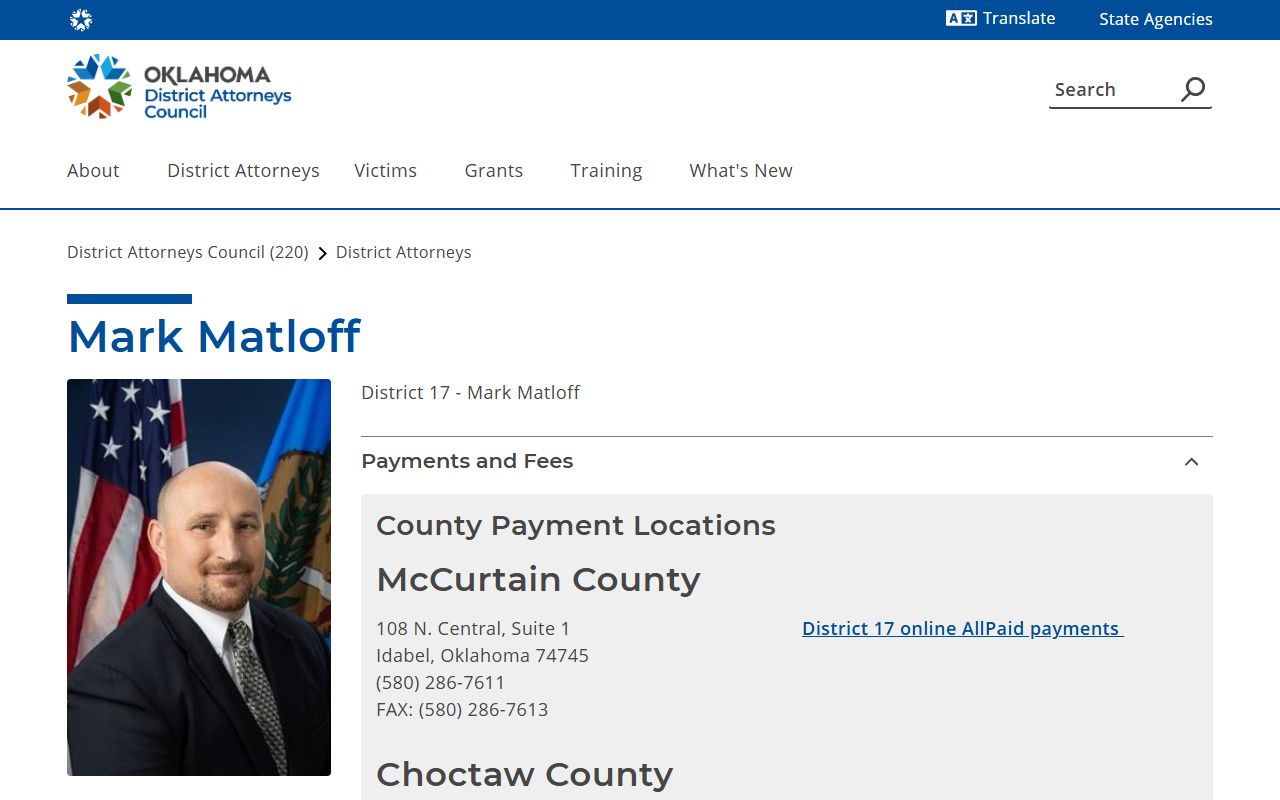
That office is where a booking charge becomes a filed charge after prosecutor review. The same office can decline a charge, file a lesser count, or wait for more evidence before filing. District 17 also serves McCurtain and Pushmataha counties, and the office posts payment and fee details for the district. In a felony case, the Information is usually tested at a preliminary hearing, where a judge decides whether enough evidence supports the charge before it moves toward trial.
| Complaint | Information | Indictment | |
|---|---|---|---|
| Filed By | Officer / Prosecutor | Prosecutor | Grand Jury |
| Common For | Misdemeanors | Many felonies | Serious felonies |
| Starts | The case | The case | The case |
Charge Status and What It Means
Charges rarely stay frozen. As a case develops, the prosecutor may amend a count, reduce a felony to a misdemeanor, add a count, or drop a charge. Judges dismiss charges for legal reasons. The docket records each change with a dated entry, so the status you see today may differ from the charge filed at the start. Reading the most recent docket line matters more than reading the first one.
| Status | What It Means |
|---|---|
| Pending | The charge is filed and active; the case has not reached a final result. |
| Amended / Reduced | The prosecutor changed the count, often to a lower level such as a misdemeanor. |
| Dismissed | A judge ended the charge, and it no longer moves toward trial. |
| Nolle Prosequi | The prosecutor formally chose not to pursue the charge. |
Charges vs. Convictions
A charge is an accusation, not proof. Being charged means the state believes there is probable cause to move forward. A conviction comes only after a guilty plea or a verdict, and it carries a much higher burden. Many filed charges never become convictions. They get reduced, dismissed, or resolved through a deferred sentence. Reading a charge as if it were a conviction is the most common mistake people make with these records.
| Charge | Conviction | |
|---|---|---|
| Stage | Accusation | Verdict or plea |
| Burden of Proof | Probable cause | Beyond reasonable doubt |
| Public Record | Yes | Yes |
Note: A pending charge on a public docket reflects an accusation still under review, not a court finding that the person committed the crime.
Sealed vs. Expunged Records
Some charge records leave public view. Oklahoma law lets eligible adults seal or expunge arrest and charge records under 22 O.S. §18 and 22 O.S. §19. Sealing hides a record from ordinary public searches. Expungement goes further and treats the record as though it never existed for most purposes. Neither is automatic. A person must fit a statutory category, file the right petition with the court, give notice, and obtain a signed order.
| Sealed | Expunged | |
|---|---|---|
| Visibility | Hidden from public | Destroyed / treated as never existed |
| Law Enforcement | Limited access | Very limited |
| Eligibility | Per 22 O.S. §18 category | Court order under 22 O.S. §§18-19 |
Charge Codes and Severity Levels
Each filed charge points to a specific Oklahoma statute. The case caption and counts list the crime, the statute number, and the level. Oklahoma sorts crimes into felonies, misdemeanors, and lesser violations. Felony cases carry the CF prefix in the case number. Misdemeanors carry CM, and traffic matters use TR. One arrest can spin off several separate charges, so a single booking may turn into a CF case with three or four counts, each with its own code and its own possible outcome.
A person facing serious filed charges may qualify for a court-appointed lawyer. Oklahoma handles much of that work through the Oklahoma Indigent Defense System. The Oklahoma Indigent Defense System page explains how court-appointed defense works for people who cannot afford a private attorney.
Indigency and appointed counsel are usually raised at arraignment, the first appearance where the judge reads the charges. At that first appearance the court also sets bond, the money or conditions that secure release while the charges stay pending. Bond and arraignment entries appear on the docket as dated minute lines.
The outcome of a charge also shapes how it reads later. A deferred sentence delays judgment while a defendant meets conditions, and it can open a path to dismissal and sealing. A suspended sentence keeps a person out of custody as long as conditions hold. Both appear in the docket entries, so a charge that looks open at filing may end in a deferred result rather than a straight conviction.
Statewide Charge and Criminal History Lookups
Local charges roll up into a statewide criminal history. The Oklahoma State Bureau of Investigation keeps the state's criminal-history repository. A name-based or fingerprint-based search through OSBI criminal-history services returns arrests and dispositions reported by Oklahoma agencies. That report reaches beyond a single county, and it is the standard source for formal background screening. OSBI charges a fee for each search. The bureau also runs the criminal-history expungement path used after a court seals a record.
Custody records sit in different systems depending on the sentence. State prison terms appear in the Oklahoma Department of Corrections offender lookup. Federal sentences show up in a separate national tool. The Federal Bureau of Prisons inmate locator tracks people serving federal sentences.
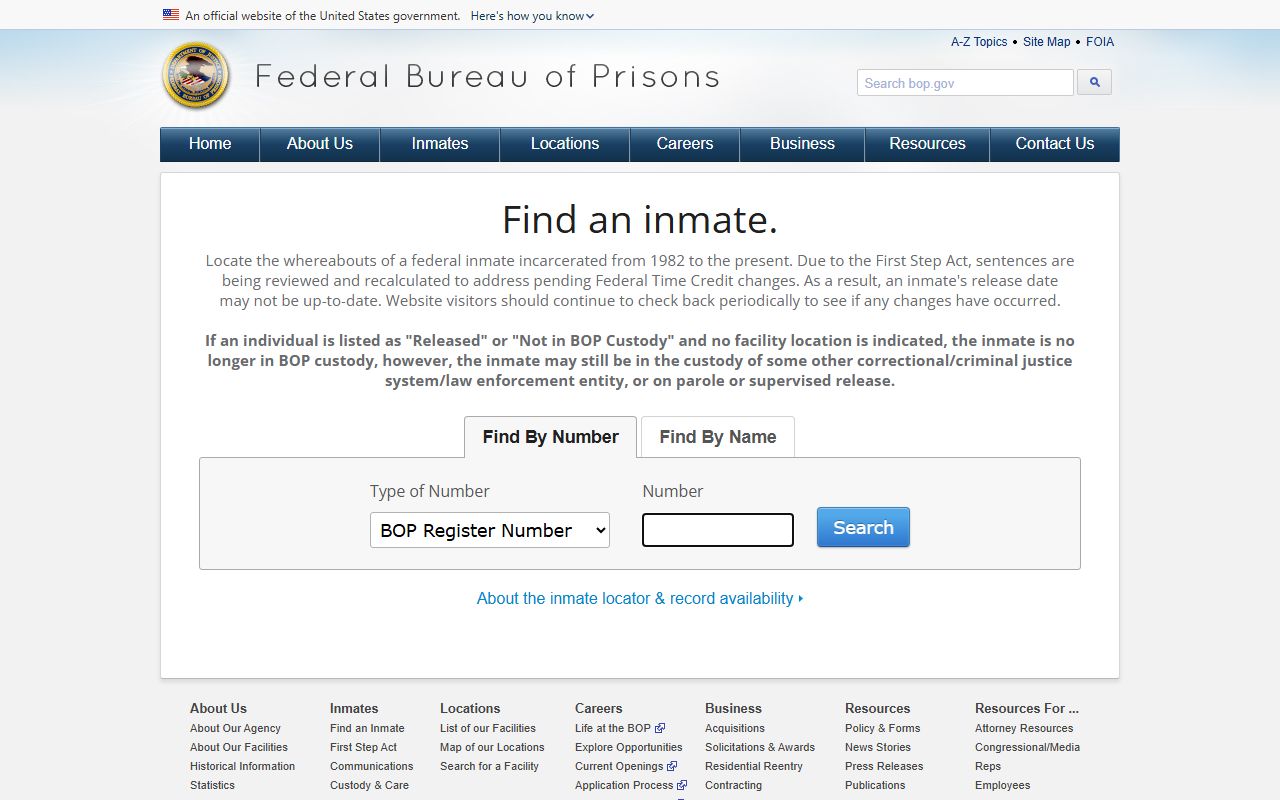
Those federal records stay separate from the Choctaw County jail roster and from the state district court charge file. A complete picture of a person's charges may require checking the county, the state, and the federal systems in turn.
Background Check Considerations
There is a real difference between a casual records lookup and a regulated background check. Free court searches and the OSBI repository help you understand a charge. A formal screening for jobs, housing, credit, or licensing falls under the federal Fair Credit Reporting Act. Those reports must come from a compliant consumer reporting agency that follows accuracy and dispute rules. A quick online charge search does not meet that standard.
Important: Choctaw County Court Records is not a consumer reporting agency under the FCRA, and its information cannot be used for employment, housing, credit, or other FCRA-regulated decisions.
Restricted Charge Records in Choctaw County
Not every charge record is open. Oklahoma keeps several categories out of public view. Juvenile charges are confidential under 10A O.S. §2-6-102. Sealed and expunged cases drop off public dockets. Dismissed charges sometimes get withheld once a sealing order is signed. Active investigation files may stay closed until charges are filed or the matter ends. Protective-order and mental-health filings can be redacted for safety and privacy.
Some charges from Choctaw County never reach the state district court at all. The county sits inside the U.S. District Court for the Eastern District of Oklahoma, which the U.S. Attorney describes as entirely Indian country. The U.S. Attorney's Office for the Eastern District of Oklahoma prosecutes federal charges that arise within that territory.
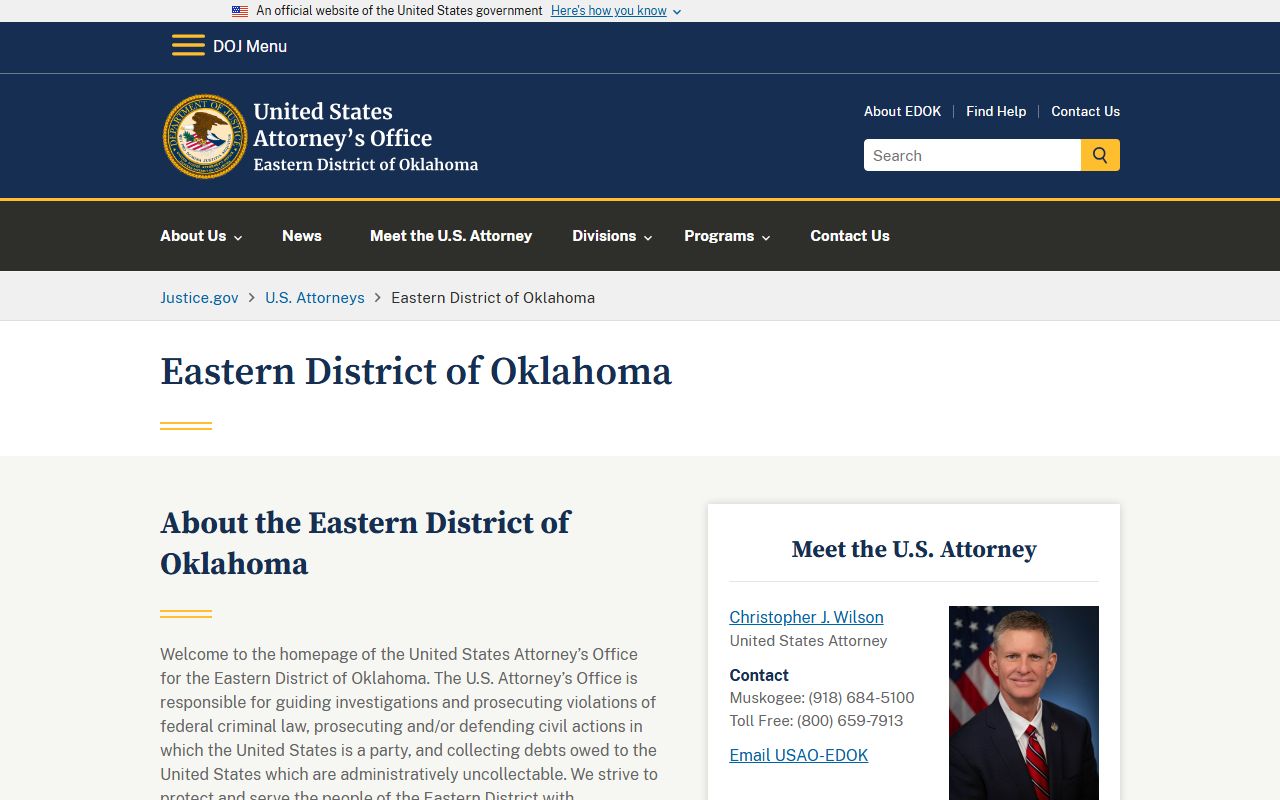
Federal charges are searched through the PACER system, not through OSCN or ODCR. Tribal charges follow the Choctaw Nation courts, which keep their own separate records.
Note: Federal and tribal charges follow their own filing systems, so a county court search will not show every charge tied to a person.